
Sending a holiday message via a virtual card remains a simple gesture that has a disproportionate effect on the recipient. The free format, accessible from a smartphone or computer, allows you to personalize the text without constraints of space or postage. The main challenge remains: finding the right words, balancing sincerity and originality, without falling into a generic message. Here are ten ready-to-use texts, each tailored to a specific situation or recipient.
1. The weather wink for a colleague stuck at the office

This text plays on the contrast between your situation and that of the recipient. It works particularly well when sent on a Monday morning.
Example: “Here, it’s 28 degrees and my feet are in the sand. I’m thinking of you in front of your inbox. Well, especially when I order my second cocktail. Hang in there, your vacation is coming!”
The tone remains light, without malice. The humor lies in the contrast, not in mockery. You can send a free holiday card with this type of message directly from your phone, between swims.
2. The tender message for parents or grandparents
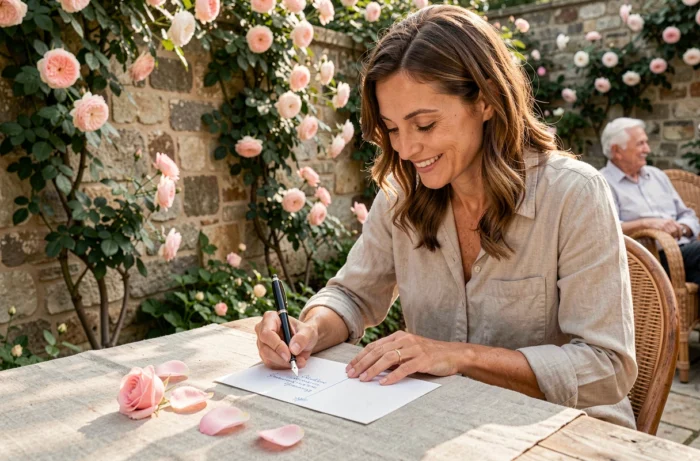
Parents and grandparents appreciate cards that show you’re thinking of them without waiting for a formal occasion. The virtual card has an advantage over the traditional postcard: it arrives on the same day.
Example: “The landscape here reminds me of those summers we spent together when I was little. The same blue, the same smell of pine. I just miss your laughter at the table. Sending you big hugs.”
A shared memory is worth more than a polite formula. By mentioning a specific detail (a place, a dish, a game), the message becomes personal and hard to forget.
3. The minimalist text for someone you don’t know well

Neighbor, recent acquaintance, distant relative: some recipients don’t warrant a lengthy message. A short text avoids the discomfort of being “too familiar.”
Example: “A little hello from the coast. The sun is generous, the days are long. Wishing you a lovely summer on your side too.”
Three sentences are enough. The message remains warm without forcing intimacy. Brevity is a mark of respect, not disinterest.
4. The adventure story for a close friend

With a close friend, the text can tell a micro-anecdote. The postcard format encourages conciseness, making the story more impactful than a long WhatsApp message.
Example: “Yesterday, we wanted to do an ‘easy’ two-hour hike. Four hours later, lost in the scrub, we were eating our last apricots while contemplating the void. It was beautiful. You would have loved it.”
This type of text works because it is rooted in a lived moment, not in a formula. The recipient can envision the scene.
5. The poetic message for a loved one

For a partner, childhood friend, or someone very close, a text that adopts a more literary tone can be pleasantly surprising.
Example: “In the evening, the sea takes on a color that no photo can truly capture. A mix of orange and gray, just before everything fades away. It’s in those moments that your absence weighs the most.”
This tone doesn’t suit all recipients. Reserve it for those who appreciate this type of expression. On a free virtual card, the visual of the sunset naturally accompanies these words.
6. The humorous text about local food
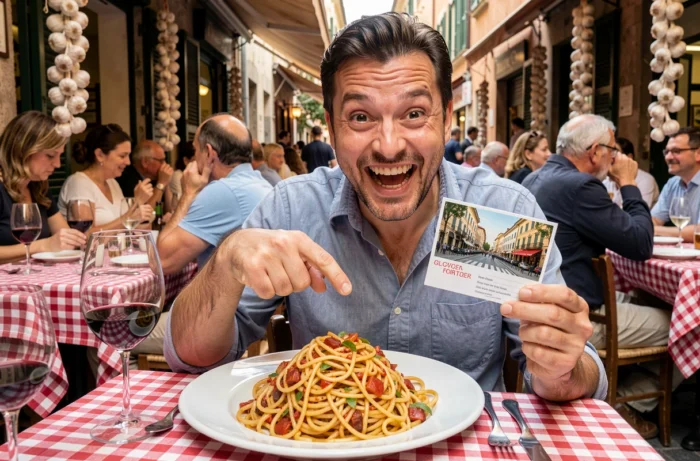
Holiday gastronomy is a safe ground for humor. Everyone can relate to summer food excesses.
Example: “Third day here. I’ve already eaten my weight in cheese and I can’t fit into my swimsuit anymore. Life is beautiful. I’ll bring you back some sausage if the suitcase still closes.”
Self-deprecation about food works with almost all recipients. This text is suitable for both a friend and a distant cousin.
7. The engaged message for a traveling friend

If you share a sensitivity to responsible travel with the recipient, the text can reflect this value without being moralizing.
Example: “We found a cove with no one around, accessible only on foot. No signal, no plastic parasol. Just the rocks, the water, and the sound of the wind. The kind of place we hope to find intact next summer.”
The message conveys an emotion related to the place without turning the card into a platform. The description is enough to carry the intention.
8. The text to send to children staying with grandparents
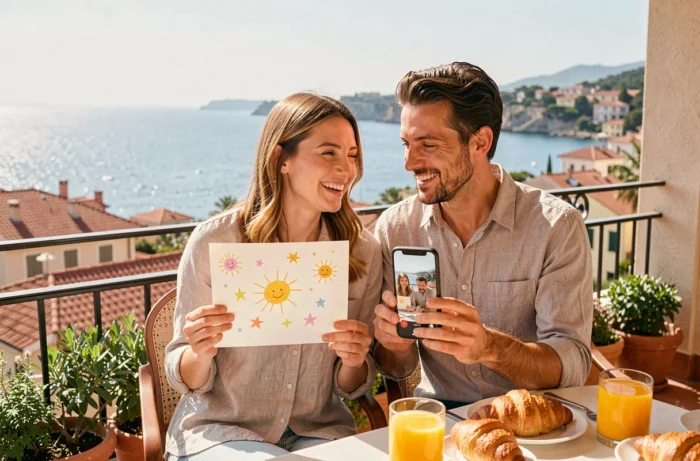
When children are not on the trip, a virtual card maintains the connection in a tangible way. The text should be simple, visual, and affectionate.
Example: “Hi my sweetheart! Today I saw a huge crab on the beach, it walked sideways just like you when you dance. You’re missing lots of kisses, I’m saving them all for your return.”
A concrete detail (the crab, an animal, a funny food) gives the child a mental image they can share in turn. It’s more impactful than a simple “I miss you.”
9. The collective message for a group of friends

Sending a single card to a group (via WhatsApp or email) requires a text that speaks to everyone without being impersonal.
Example: “Hey gang! We arrived, the house is perfect, the fridge is full, and the pool is at 24 degrees. We just miss your faces. We’ll raise a glass to your health tonight. See you soon!”
- Mention a detail about the place to anchor the message in reality (the pool, the view, the temperature).
- Include a reference to the group so that everyone feels included (“the gang,” “your faces”).
- End with a projection towards a reunion, which encourages a response.
10. The quirky text that subverts postcard codes
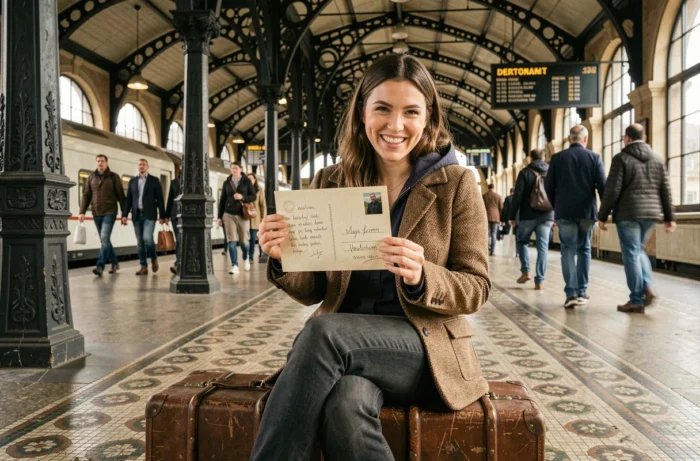
The classic postcard has its clichés: “the weather is beautiful,” “we’re thinking of you,” “kisses from the whole family.” Subverting these codes creates an immediate comedic effect.
Example: “Dear all, the weather is absolutely horrible, the food is disgusting, and we are deeply bored. (Just kidding. Actually, it’s perfect and we don’t want to come back. Sorry.)”
This two-part format, with a fake complaint followed by the truth, surprises because it breaks the expected mechanics of a holiday card. It suits recipients who appreciate irony.
The choice of text primarily depends on the recipient and your relationship with them. A successful holiday card doesn’t need to be long or sophisticated. It should give the impression that you thought of this specific person, at this precise moment, from the place where you are.