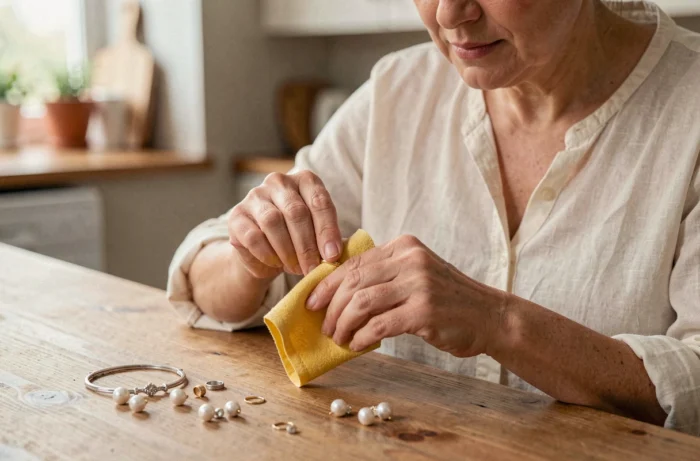
Your silver rings have lost their shine, your gold necklace looks dull after just a few weeks of wear. The culprit is rarely a visible shock or scratch. It’s an invisible film of sebum, cream residues, and dust that accumulates day after day. The chamoisine, that little soft cloth often provided with a new piece of jewelry, is the first step to counter this phenomenon, provided it is used correctly.
What really damages your jewelry on a daily basis
Before discussing the chamoisine, it’s important to understand what it acts against. The main enemy of metal is oxidation. Silver is particularly sensitive to it: it reacts to ambient air, humidity, ammonia, and even the natural acidity of the skin.
This gradual tarnishing is not a manufacturing defect. It’s a normal chemical reaction that affects all silver jewelry, including high-quality pieces.
Gold is more resistant, but common alloys (gold 375 or 585) contain copper or silver that eventually oxidize as well. As for costume jewelry, its thin layer of plating wears off even faster when in contact with cosmetics, chlorine, or perfume.
Have you noticed that some pieces of jewelry tarnish faster than others on your skin? Skin acidity varies from person to person, which explains this difference. Understanding jewelry maintenance with a chamoisine allows you to intervene before oxidation sets in permanently.
Chamoisine for jewelry: how it works on metal
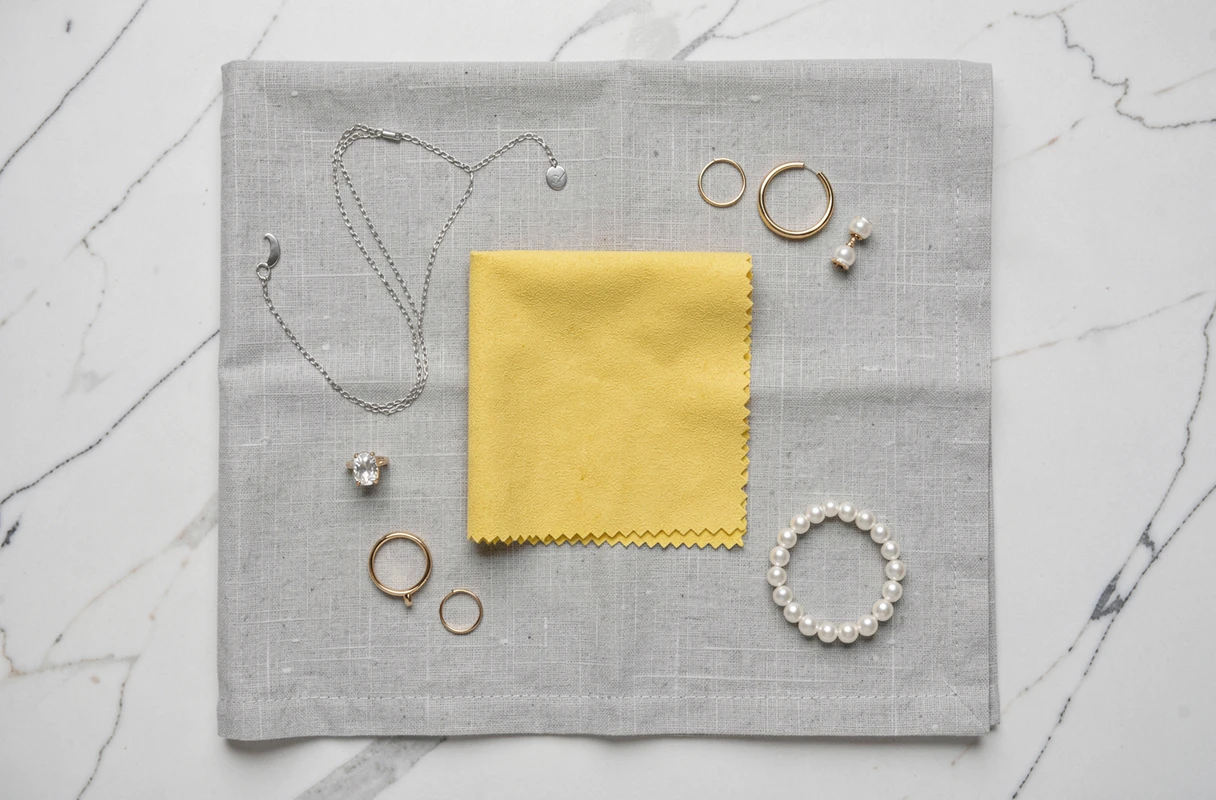
A chamoisine is not just a simple piece of fabric. It is a cotton or microfiber cloth impregnated with very fine polishing agents, sometimes invisible to the naked eye. These micro-particles remove the superficial layer of oxidation without scratching the metal.
Specifically, when you gently rub your silver ring with a chamoisine, you remove three things: fingerprints (greasy film), embedded dust, and the beginning of tarnishing. The jewelry regains its shine without the need for water or chemical products.
Dry or damp chamoisine
A dry wipe is sufficient for regular maintenance. If the jewelry is very tarnished, some people use a light mist of steam before rubbing. However, never wet the chamoisine under water: you would dilute the polishing agents and render the cloth ineffective.
The right polishing technique
Always rub in the same direction, using straight movements. Circular motions create micro-scratches that, over time, dull the surface instead of polishing it. On a chain, hold the link between two layers of chamoisine and pull gently.
Natural stones and pearls: adapting the technique to the material
The chamoisine is presented as the safest tool for regular cleaning, including for jewelry set with stones. Not all stones react the same way.
Hard stones (diamond, sapphire, ruby) withstand a wipe with a chamoisine well. Their high hardness protects them from the micro-abrasives contained in the cloth.
Pore stones and organic materials require more caution. Pearls, coral, turquoise, and opal absorb chemical substances. For these pieces, use only the non-impregnated side of the chamoisine, or better yet, a soft dry cotton cloth without any treatment.
- Pearls: never use any product, even natural. A very light wipe with a soft cloth after each wear is sufficient. Soapy water should be avoided as it weakens the silk thread.
- Turquoise and opal: these stones lose their color when in contact with solvents. A quick pass with a dry chamoisine, without pressing, preserves their surface.
- Emerald: often treated with oil to mask its natural inclusions. Too aggressive cleaning removes this treatment and makes the cracks visible.
When the chamoisine is no longer enough: additional cleaning
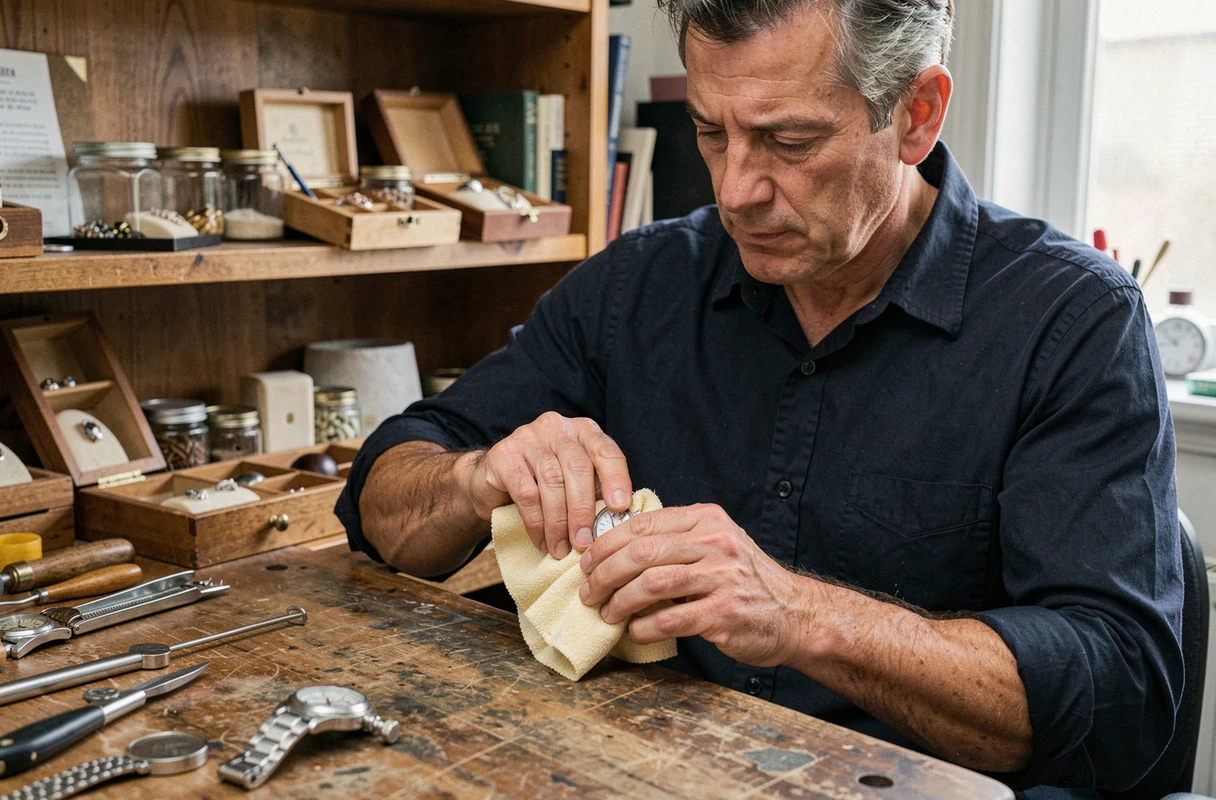
A regular pass with the chamoisine delays tarnishing, but it does not replace a deep cleaning when oxidation has already set in. On heavily tarnished silver, the chamoisine alone will not tackle sulfides.
For silver, a quick soak in warm water with a few drops of mild soap remains the safest method. Then, gently scrub with a soft-bristled toothbrush, rinse with clear water, and dry immediately with a clean cloth.
Baking soda, often recommended, works but acts as an abrasive. On a mirror-polished piece, it can leave fine scratches. Reserve it for heavily oxidized pieces that you can then repolish with the chamoisine.
- White vinegar: effective on tarnished silver, but to be avoided on pearls, coral, and porous natural stones.
- Toothpaste: too abrasive for most jewelry. It scratches gold plating and attacks soft stones.
- Household products, bleach, ammonia: to be banned. They attack alloys and dissolve certain surface treatments.
Storage and maintenance routine to prolong shine
Storage is as important as cleaning. A silver piece left exposed on a bathroom shelf will tarnish much faster than a piece kept in an anti-tarnish pouch or an airtight bag.
Humidity accelerates oxidation. If you live by the sea or in a humid area, slip a small silica gel packet into your jewelry box. This simple gesture slows down the return of oxidation between wears.
The routine that preserves your jewelry
Put on your jewelry last, after perfume, cream, and makeup. Take them off first in the evening. Use the chamoisine after each removal: this gesture of a few seconds eliminates the greasy film before it sets.
A piece of jewelry regularly wiped with a chamoisine requires deep cleaning much less often. The daily routine replaces laborious recovery sessions. And when tarnishing eventually sets in despite everything, you start from a cleaner base, making the work easier.
Keep your chamoisine in a dry place, away from dust. Do not wash it in the machine: detergent neutralizes the polishing agents. When it becomes saturated with black residues, simply replace it.